

Schedule
This project comprised three phases which were design, construction, and testing.
In the first phase, the design, all work needed to be finished by December 5, which marked the end of the fall quarter. Completing the design involved conducting 12 analyses to guide part development. This specific requirement often led to conflicts within the design process. Conflicts arose if preceding tasks were not completed since each part's design relied on the others. Adhering to the schedule was of utmost importance, as any delays extending into the winter quarter would result in the vehicle not being finished on time.
As for the construction and assembly phase, the goal was to complete the car by the end of the winter quarter. While some design adjustments were anticipated initially, they were minimized to ensure that the car would be done by the end of the winter quarter due to some of the parts being outsourced.
The final phase was the testing phase, which was to be completed before the RC competition for the spring quarter. An anticipated challenge in this phase was the development of testing methods to apply. While the project requirements were defined, the specific testing procedure was not, which introduced an element of uncertainty for the team.
Gant Chart Schedule

Table 1 Gant Chart

Table 2 Gant Chart
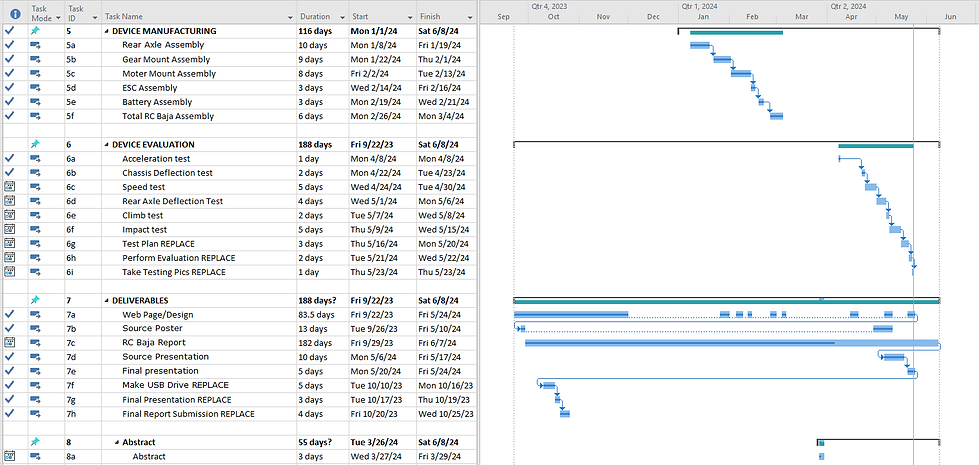
Table 3 Gant Chart
Budget
Two primary costs that needed to be accounted for were: parts and labor. "Parts" encompassed materials and purchased components, while "labor" included in-house manufacturing work and outsourced production. The in-house manufacturing labor did not impact the project's outcome as team members volunteered their time without charging for it. Moreover, a contingency fund was implemented to be utilized for unforeseen expenses or in case of a budget surplus within an existing category of the project.

